
 Available in GB
Content
- Checking Whether a Casino Accepts E-cheques in the UK
- E-cheque Availability Across Online Casino Cashiers
- Assessing E-cheque Casino Claims Without a Verified Site List
- Deposit Amounts and Limits to Check Before Paying
- Comparing the Full Cost of a Casino Payment
- What a Casino Payment-Method Listing Can—and Cannot—Confirm
- Deposits, Withdrawals and Returning Funds to the Original Source
- Why Deposit Speed Does Not Guarantee Fast Payouts
- Payment Security and Ownership Checks
- UK Account Controls Before Making a Casino Deposit
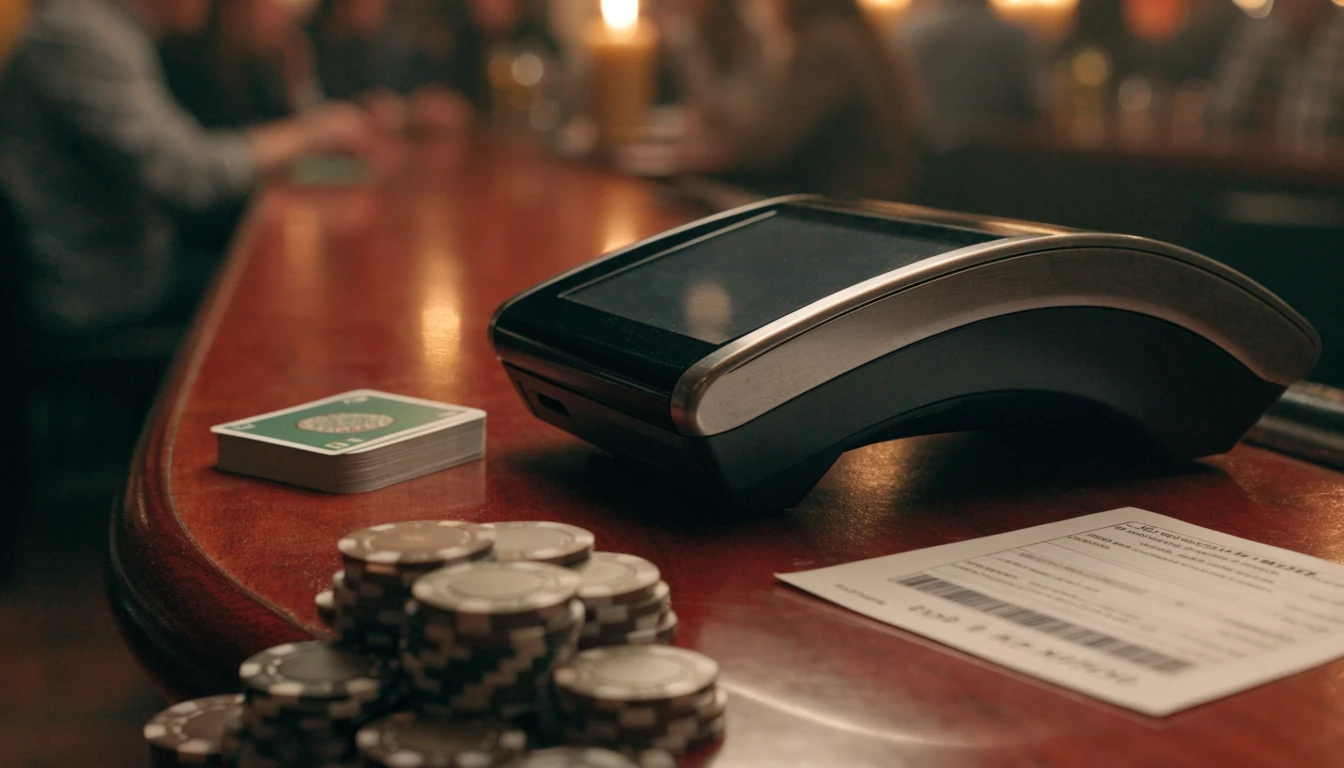
Payment listings can indicate available options, but the cashier and transaction details are needed to confirm whether an e-cheque can be used.
Checking Whether a Casino Accepts E-cheques in the UK
A casino’s UK-facing status does not, by itself, establish that it accepts e-cheques. Regulation and payment support are separate questions: a remote gambling licensee serving customers in Great Britain must hold the relevant UK Gambling Commission licence, but that requirement does not prescribe which payment methods the licensee must offer. A casino can therefore be authorised to serve the market without offering the particular deposit route being sought.
The distinction matters when looking for e-cheque casinos in the UK. A site may be accessible to UK customers, display familiar payment logos or describe its cashier in general terms, yet none of those details confirms that an e-cheque option is available. Payment arrangements can differ between operators, and a method mentioned outside the cashier may not be selectable for the intended transaction. The relevant evidence is the payment information presented within the casino account, not the operator’s location or the audience its website addresses.
A published list of payment methods can be useful as an initial indication, but it should not be treated as a definitive account of current support. For instance, a specialist review may list Visa and Mastercard for a site, while the current UK cashier still needs to be checked for availability and eligibility of the particular card product. The same cautious approach applies to an e-cheque reference: a general statement may identify a method the operator has discussed, but it does not establish that the option can be used in a UK account.
This is especially important where the wording is broad or unclear. “Bank payment”, “electronic payment” and similar descriptions do not necessarily mean e-cheque. Nor does a page that groups several payment routes together establish that every route is offered to every customer. Without a specific e-cheque option being shown in the relevant cashier, the claim remains unconfirmed. A similar-looking label should not be treated as equivalent unless the operator’s own payment information makes that connection clear.
Entropay at UK Casinos: How to Verify Acceptance
The appropriate check is therefore narrow and practical. The cashier should identify the payment methods available in the account and specify which one is selected for a deposit. If the e-cheque route is absent, a reference elsewhere on the site does not demonstrate that the account can use it. If the label appears but its meaning is ambiguous, the operator’s payment terms or support channel can clarify whether it refers to an e-cheque rather than another bank-based method. The point is to establish the route itself, not to infer it from a general claim about payment coverage.
A UK Gambling Commission licence remains essential when assessing whether a remote gambling operator is legally authorised to serve the British market. It is not evidence of e-cheque support, however, and the reverse is also true: a payment-method claim does not establish that a casino is licensed. These checks answer different questions. The licence concerns the operator’s regulatory status; the cashier concerns the payment options it makes available. Treating one as proof of the other can lead to an inaccurate assessment.
Searches for casinos accepting e-cheque deposits may return pages that use the term without showing how it applies to a UK customer. A result can be outdated, describe a different market, or refer to a payment facility that is not offered in the current cashier. The wording on a promotional page may also be less specific than the transaction screen. These possibilities do not prove that a claim is false, but they do mean it should not be relied upon without a direct check.
For the same reason, a “best” or “top” label is not a substitute for evidence of acceptance. A comparison can only support a conclusion about e-cheque availability if it identifies the route clearly and the casino’s current UK cashier confirms it. Where that confirmation is absent, ranking the operator as an e-cheque option would overstate what is known. No casino should be named as accepting e-cheques solely because it is UK-facing, licensed, or associated with other payment methods.
Attention: A UK Gambling Commission licence is essential for legal authorisation, but it is not evidence that a casino accepts e-cheques.
The sound conclusion is limited but useful: UK status establishes neither the presence nor the absence of e-cheques. Confirmation must come from the casino’s own current payment interface, with any unclear terminology checked against its payment information. Until that evidence is available, the status of a particular casino as an e-cheque option should be regarded as unverified.
Top online casinos in the UK
- JetsetspinsBonus: 200% Bonus + 100 Free Spins + Free Royal Wheel · Payout speed: 1-3 business days
- x3betBonus: Welcome Pack 100% Up to £1.000 + 200 Free Spins · Payout speed: 1-3 business days
- SpinFormulaBonus: 550% Up To £15,000 + 550 FS · Payout speed: 1-3 business days
- ChanzeBonus: Slots Welcome Bonus #1 200% up to €500 · Payout speed: 1-3 business days
- BritsinoBonus: Welcome Package – Get your £2,200 + 2,000 FS · Payout speed: 1-3 business days
- DieselwinBonus: Welcome Pack 250% up to £4000 + 200 FS · Payout speed: 1-3 business days
- EvoSpinBonus: 125% up to €2500 + 125 Free Spins · Payout speed: 1-3 business days
- SlotoSportBonus: 500% up to £ 10 200+ 777 FS · Payout speed: 1-3 business days
- WinBeastBonus: €5000 + 500 FS + €650 Freebet · Payout speed: 1-3 business days
E-cheque Availability Across Online Casino Cashiers
A payment method appearing in casino information does not, by itself, establish that it is available to every customer. A cashier presents options in the context of a particular account and transaction. For e-cheques, the relevant distinction is therefore between a general mention of the method and an option that can actually be selected for the account in question.
Availability can also be specific to the stage of a transaction. A method shown in a deposit menu is evidence about deposits, not necessarily about withdrawals. Conversely, a method mentioned in general payment information cannot be treated as confirmation that it will appear in either part of the cashier. The two functions need to be considered separately; a payment route should not be described as supporting both unless the cashier confirms both.
The cashier is the practical point at which a general claim becomes relevant to an account. Its options may be presented after login, when the customer begins a deposit or withdrawal, rather than in a public-facing page. A payment method may be absent from that particular menu even if it appears elsewhere in the casino’s information. That difference does not establish why it is absent, but it does mean that a broad statement about the site is not enough to determine whether the route is usable in a specific transaction.
Casinos That Accept Bank Cheques in the UK
This distinction matters when evaluating claims about an e-cheque casino in the UK. A page may use the term to describe a payment route, while the account cashier presents a different set of choices. The first is a general representation; the second concerns the transaction available to a particular customer at that point. Neither should be substituted for the other. A claim that a site accepts e-cheques is most useful when it identifies the relevant transaction stage and remains consistent with what the cashier displays.
The same caution applies to payment methods that are more familiar in UK casino cashiers. Debit cards, including Visa and Mastercard, are commonly accepted by UK casinos, but that broad pattern does not show that every card product is eligible at every site. It also cannot be used to infer anything about e-cheque availability. Payment options should be assessed individually rather than treated as interchangeable because they appear alongside one another in a general list.
Open banking and bank transfers provide another example of why broad descriptions need context. A specialist review has reported that these routes can support instant deposits and fast withdrawals at many sites. That is a qualified account of possible availability, not confirmation for a particular casino account or transaction. It does not establish that every operator offers those routes, that both functions are available at the same site, or that an e-cheque route works in the same way. Comparisons are useful only when they preserve those distinctions.
Do
- Check the cashier for selectable options
- Treat deposits and withdrawals separately
- Verify the current options in the account
Don’t
- Rely on general mentions of a method
- Assume deposit support implies withdrawals
- Use past displays as conclusive evidence
A cashier can also present different information at different points in the process. The options shown before a transaction is started are relevant to what can be selected then; a completed transaction record describes what was used. Neither should be stretched into a claim about every future transaction. Payment menus and account circumstances can change, so a past display is not conclusive evidence of present availability. For a decision being made now, the current options in the relevant cashier matter more than a general description or an old account of what was once offered.
It is useful to keep three statements separate: a casino mentions e-cheques; an e-cheque option appears in a customer’s cashier; and the method is available for the intended transaction. The first establishes only that the term is used in the casino’s information. The second is evidence of a displayed option, but its relevance depends on whether the customer is looking at deposits or withdrawals. The third requires that the option be selectable for that transaction. Treating these statements as equivalent can lead to overconfident conclusions about what a customer can actually do.
The distinction does not depend on whether an e-cheque is described as a preferred or prominent method. A prominent mention is still not the same as a selectable cashier option. Nor does the presence of several other payment routes settle the question: cards, bank transfers and e-cheques are separate methods, and availability for one cannot be inferred from availability for another. The most precise description records what the cashier displays and which transaction it concerns, without turning that observation into a universal claim about the casino.
Casinos That Accept Ethereum in the UK
Accordingly, availability is best understood as account- and transaction-specific rather than as a fixed attribute established by a payment-method label alone. This does not identify which casinos offer e-cheques; it defines the evidence needed to distinguish a general reference from a usable option. Any assessment of the route should preserve that distinction, particularly where information about deposits is being used to make a claim about withdrawals, or where a site-wide description is being applied to an individual cashier.
Assessing E-cheque Casino Claims Without a Verified Site List
A ranking of e-cheque casinos is only useful if its central claim can be checked: that the named casino offers the payment route to the customer concerned. A page describing a site as one of the best e-cheque casinos does not, by itself, establish that an e-cheque option is currently available to UK customers. Nor does a broad list of cashier methods demonstrate that a particular method can be used with a particular account.
That distinction matters when comparing claims about e-cheque online casinos in the UK. A ranking may combine general descriptions, promotional language and payment information that does not address the same question. The label “best” is especially difficult to assess without transparent criteria and current evidence for each entry. A more cautious approach is to treat such a label as a claim to examine, not as a finding.
Labels such as "best" or "top" are not substitutes for evidence of acceptance and should be treated as claims to examine rather than findings.
The comparison should centre on the payment route being claimed, rather than on unrelated cashier features. A casino may list several ways to pay, but the size of that list does not establish that it accepts e-cheques. Likewise, a polished mobile site or a broad range of games cannot substantiate an e-cheque claim. These details may matter in a wider assessment of a casino, but they do not answer whether the payment method is available.
For people considering e-cheque deposit casinos, consistency of account ownership is a more relevant criterion. The account details and payment route should belong to the same customer. When they do, basic ownership information is less likely to create avoidable friction in a transaction. This is a practical point about matching identities, not evidence that a particular casino supports e-cheques.
The clearest arrangement is often to use one named account consistently for deposits and withdrawals. That makes the relationship between the casino account and the payment route easier to establish than switching between accounts with different ownership details. It does not guarantee that a transaction will be accepted or remove every possible check; it simply reduces the chance that a mismatch in basic ownership details becomes an obstacle.
This criterion is more specific than comparing cashier breadth. A site can appear attractive because it advertises many payment options, but breadth alone says little about whether the customer can use a particular route under their own account. For an e-cheque claim, the relevant evidence concerns the named method and the account holder, not the number of alternative methods displayed.
Casinos that accept Tether in the UK: what is verified
The same distinction applies to searches for mobile e-cheque casinos. A mobile-friendly presentation is not proof that an e-cheque route is available through a mobile account. A ranking that places emphasis on mobile access should not be treated as evidence of payment support unless it establishes that the specific payment option is offered to the relevant customer. A usable interface and a supported transaction route are separate claims.
Claims framed around the best e-cheque casinos in 2026 also need a time-sensitive reading. Payment information can change, and a statement made at one point should not be treated as a permanent guarantee. A ranking that does not make clear what its assessment covers cannot reliably settle the question of current support. The year in a headline is not, by itself, proof that the underlying information has been checked recently.
A sound assessment therefore separates three ideas: the casino’s general presentation, the range of methods it mentions, and the ownership consistency of the proposed payment route. Only the last of these directly addresses whether account details could introduce avoidable transaction friction. None should be used as a substitute for confirming an e-cheque option in the casino’s own account and cashier.
The UK regulatory context also matters when assessing a casino claim. Remote gambling licensees serving the British market must hold the relevant UK Gambling Commission licence. A payment-method ranking is not evidence of that status, just as a licence does not establish that e-cheques are accepted. These are separate questions and should be assessed separately.
Verify E-cheque Claim
- Confirm the payment route is presented in the account cashier
- Ensure the payment account belongs to the same customer
- Check that the casino holds a valid UK Gambling Commission licence
Accordingly, a defensible comparison should avoid naming a “best” operator unless the payment claim can be established for the intended market and customer. Where that evidence is not available, the ranking remains unsubstantiated. The practical standard is narrower: assess whether the named payment route is actually presented for the account, and whether the payment account and casino account belong to the same customer. That offers a clearer basis for evaluating an e-cheque claim than a general score for cashier features.
Deposit Amounts and Limits to Check Before Paying
The amount shown beside a payment method can determine whether a deposit is possible, even when the casino’s general cashier information appears suitable. For an e-cheque deposit, the relevant figures are the minimum accepted for that route and the maximum permitted for the transaction. These should be treated as method-specific terms, not assumed to match the limits shown for other ways of paying.
A specialist casino review gives a minimum-deposit range of £10–£20, with the threshold depending on the selected payment method. That range is an indication reported by that type of source, not a fixed UK-wide rule or a confirmed e-cheque minimum. A particular cashier may set a different threshold, and a published figure may not apply to every account. The amount presented in the deposit flow is therefore more relevant than a general statement about casino minimums.
Separate the minimum from the maximum
The minimum answers whether a proposed deposit meets the entry threshold. Maximums determine how much can be placed in a transaction or over a stated period. These are separate conditions: meeting the minimum does not establish that a larger amount will be accepted, and a maximum for one payment route should not be applied to another.
Casinos That Accept MuchBetter in the UK
A specialist review reports that maximum deposit limits may be set per transaction, per day or per month, and can differ by payment method and account status. This means that a single headline limit may not describe the full set of restrictions. A transaction cap concerns one payment; a daily or monthly cap concerns accumulated deposits across the relevant period. The terms should make clear which kind of cap is being displayed.
Account status is also relevant to interpreting a limit. The maximum available to one account cannot safely be treated as a universal allowance for all customers. Limits may change with the account’s status, while the payment method selected may impose a separate ceiling. A figure found in a general casino description can therefore be incomplete if it does not identify the method and account conditions to which it applies.
For an e-cheque deposit casino, the practical comparison is not simply between a low minimum and a high maximum. The stated minimum needs to match the intended deposit, while any transaction and period-based maximums need to accommodate the amount within the applicable account terms. If the cashier presents one figure but the terms describe another, the discrepancy should be resolved before submitting a payment rather than inferred in favour of the higher amount.
Read the limit in context
Payment limits should be checked at the point where the proposed amount is entered, alongside the casino’s relevant terms. A number may refer to a single transaction rather than all deposits, or to a period total rather than a per-payment restriction. The distinction matters when several deposits are planned: satisfying each individual transaction cap does not, by itself, establish that a daily or monthly cap has not been reached.
Attention: Satisfying an individual transaction cap does not guarantee that a daily or monthly deposit limit has not been reached.
The same caution applies when comparing casinos described as suitable for e-cheques. General recommendations do not establish the minimum or maximum that will appear for a particular payment route. Nor does a limit published for one cashier method establish the limit for another. The amount should be checked against the specific method and the account conditions in force.
A useful comparison records the displayed minimum, the maximum per transaction, and any daily or monthly ceiling, while noting whether the terms connect those figures to account status. If one of these details is not clear, the limit cannot be reliably compared with another site’s terms. This is a question of transaction size: the figures establish how much may be deposited under stated conditions, not whether an e-cheque route is available or how a later payment will be handled.
Comparing the Full Cost of a Casino Payment
A low or absent charge shown beside a payment option does not establish that the transaction is cost-free. A specialist review of payment charges identifies several possible sources of expense: a casino fee, a fee from the payment provider, an issuer or bank charge, a currency-conversion spread and, where relevant, a network fee. Which of these apply depends on the route used and the transaction itself.
Casinos That Accept Neteller in the UK: What to Check
For an e-cheque casino in the UK, the relevant comparison is therefore not simply the amount displayed in the cashier. A casino may show its own charge while a bank or payment provider applies a separate cost. Currency conversion can also affect the final amount if the casino account and payment route do not use the same currency. The displayed transaction value and the amount ultimately debited may consequently differ.
The conversion spread deserves particular attention. A specialist review notes that the cost embedded in an exchange rate can exceed a visible flat fee. A method described as having no stated transaction charge may therefore still carry a cost through conversion. Conversely, a visible fee alone does not show the total expense if other charges also apply.
There is no payment method that can be identified as the cheapest in every case. A meaningful comparison uses the same intended amount and checks the casino’s charge, provider fees, any bank or issuer charge, the exchange rate and any network cost. Comparing different amounts or currencies can produce a misleading result because the relevant costs may not apply in the same way.
This matters when assessing claims about the best e-cheque online casinos in the UK: a favourable headline description is not a full cost comparison. The total depends on the payment route available for the transaction, the account currency and the charges imposed by the organisations involved. Without those details, a general claim that one route is cheaper than another cannot be established.
A method described as having no stated transaction charge may still carry a cost through the currency conversion spread.
A sound comparison therefore records each possible charge separately rather than treating the cashier’s visible fee as the complete price. The distinction is practical: costs may arise at different points in the transaction, and not all of them will necessarily appear in the casino’s own payment information. The actual total, rather than a label such as “free”, is the relevant basis for comparison.
What a Casino Payment-Method Listing Can—and Cannot—Confirm
A published payment page can indicate which methods a casino presents as supported, but it does not establish that every route is available to every customer. Nor does a general list of payment brands confirm that an e-cheque option is offered. These are separate claims: one concerns the cashier’s stated methods; the other concerns a specific payment route.
A specialist review describes casino payment pages that list Visa, Mastercard, bank transfer, e-wallets and some cryptocurrencies. Such a summary can help identify the kinds of methods discussed, but it should not be treated as confirmation that each one remains available or that e-cheques are included. Payment information can be broad, incomplete or out of date, and a brand name alone may not clarify which products or routes are supported.
Currency statements need the same careful reading. A specialist review reports that the relevant pages state that GBP is supported. That indicates a currency option is described; it does not show that a particular e-cheque service accepts sterling, or that a casino account will be denominated in pounds. Account currency should be confirmed before the first transaction, since a mismatch can lead to conversion.
Casinos That Accept Boku in the UK: Current Options
The wording on a payment page also matters. “Bank transfer” identifies a broad category, not necessarily a particular service or processing route. Likewise, an e-wallet listing does not establish that every wallet function is accepted. A casino may describe a method generally while leaving product eligibility or customer access unclear. None of these descriptions, on its own, verifies e-cheque acceptance.
A useful reading of published information therefore separates three points: whether the casino names a payment category, whether it identifies the specific route being considered, and whether the account currency is suitable. Clearer information addresses each point directly. Where a page gives only a broad method list or a general currency statement, the conclusion should remain limited to what that wording actually supports.
This distinction is important when comparing claims about e-cheque casinos in the UK. A payment-method page can provide context, but a mention of GBP or bank transfers is not evidence of an e-cheque facility. The published description should not be stretched beyond its wording; a specific route requires specific confirmation.
Deposits, Withdrawals and Returning Funds to the Original Source
A casino payment does not necessarily create a separate route for receiving a withdrawal. UK anti-money laundering rules generally require funds to be returned to the source used for the deposit. This is often described as a closed-loop approach: the payment path used to put money into an account can determine how a later payout is handled.
For an e-cheque casino payment in the UK, the relevant point is therefore not only whether the method can be used to deposit. The cashier’s withdrawal instructions also matter. The operator may direct a payout back through the original route, or explain that another method is needed where that route cannot receive funds. The available instructions can depend on the payment arrangement and the casino’s procedures, so they should be checked in the account rather than inferred from a general payment-method listing.
Closed-loop approach
UK anti-money laundering rules generally require funds to be returned to the original source used for the deposit. This means the payment path used to fund an account often determines how payouts are handled.
Using the original source can make the route more straightforward because it aligns the deposit and payout records. If an alternative is proposed, the casino may request additional verification before releasing funds. That can involve checking the account or payment details associated with the proposed route; it should not be assumed that a different method will be accepted automatically.
This is a routing issue, not a promise about how quickly money will arrive or whether a particular e-cheque service supports withdrawals. A deposit option alone does not establish that the same service can receive a payout. Where the cashier’s terms are unclear, the operator’s explanation of its withdrawal process is more relevant than a broad statement that e-cheques are accepted.
The distinction matters when comparing payment arrangements: the practical route includes both the original deposit source and the casino’s stated process for returning funds. Any change to that route may bring further checks, while the original-source requirement remains the central consideration.
Why Deposit Speed Does Not Guarantee Fast Payouts
A deposit and a withdrawal are separate transactions, so the time taken for money to enter a casino account does not establish how quickly a payout will arrive. A specialist review describes card deposits as potentially instant while withdrawals may take several business days. That contrast illustrates why a payment route’s apparent speed at the deposit stage is not a reliable guide to the full withdrawal process.
USDC at UK Casinos: What Acceptance Evidence Shows
A payout may involve the casino’s own review before it is sent onward. A specialist review notes that withdrawal processing time includes this internal approval, rather than consisting only of the time taken by a bank or payment provider. The clock therefore does not necessarily start and end with the external transfer: the casino’s handling of the request is part of the overall wait.
First withdrawals can take longer when KYC checks are still being completed. If verification is outstanding, the casino may need to resolve it before approving the payment. A fast deposit does not remove that step or establish that the account is ready for a withdrawal. This can make the first payout experience different from later requests, even when the same payment method is involved.
For e-cheque deposits, the distinction is important: a deposit confirmation says that funds have reached the casino account, not that an eventual withdrawal will be processed at the same pace. Deposit and payout timings should therefore be considered separately. Published processing estimates also need to be read as applying to the relevant transaction stage; a figure for deposits cannot be treated as a withdrawal estimate.
The practical measure is the full interval from submitting a withdrawal request to receiving the funds, including casino approval and any verification still required. A payment method described as quick at deposit may not make that interval short. No direct inference about payout speed follows from the speed of the incoming payment alone.
Payout Timing Factors
- Casino internal review and approval
- Completion of KYC verification checks
- External processing time by banks or providers
Payment Security and Ownership Checks
Payment security depends partly on whether the casino account and the payment route can be linked to the same customer. Consistent ownership details reduce the chance that a transaction is delayed by basic questions about who controls the funds. This is an administrative safeguard, not evidence that a particular payment method has special security features.
An e-cheque label alone does not establish whose account will be used or what checks apply. The relevant details are the name on the casino account, the ownership information associated with the payment route and any conditions shown by the operator. Where those details do not align, the casino may need to establish who is making the payment before proceeding. That can add friction even if the payment option appears in the cashier.
Returning funds to the original payment source is a common anti-fraud and anti-money-laundering control. It helps maintain a clear link between the deposit and any subsequent return of funds. A different route may be considered where the original source cannot be used, but that alternative can require further verification. The result depends on the operator’s process and the circumstances of the account; the presence of an e-cheque option does not, by itself, confirm how a withdrawal would be handled.
For comparisons of casinos that accept e-cheques in the UK, ownership compatibility is therefore a practical criterion alongside the payment method’s displayed name. A casino’s claim about accepting e-cheques does not establish that every customer’s payment route will pass its checks. Consistent personal and payment details make ownership easier to establish, while inaccurate or mismatched information may prompt questions or prevent a transaction from being completed. These checks concern the customer and the route used, rather than proving that e-cheques are inherently safer or less safe than other payment methods.
Casinos That Accept Interac in the UK: What to Check
UK Account Controls Before Making a Casino Deposit
A payment option does not replace the account safeguards that apply at a UK-licensed casino. UK Gambling Commission rules require remote gambling licensees to prompt new customers to set a financial limit before they make their first deposit. They must also provide accessible controls for setting limits within the account.
This requirement is relevant regardless of whether a deposit is made by e-cheque or another method. The control concerns the customer’s gambling account, not the technical route used to move funds. Looking for e-cheque casinos for UK players therefore involves a separate question from whether an operator provides the required account-level tools.
The prompt should appear before the first deposit, rather than being treated as an optional feature to find later. Accessible account controls also allow customers to manage limits without relying solely on a payment provider’s settings. These are distinct safeguards: one applies at the point before a new customer deposits, while the other concerns the availability of controls within the account.
Age verification is another condition of access to gambling funds: operators must verify a customer’s age before allowing a deposit. Financial-limit prompts and account controls do not replace that check, nor do they establish that a particular payment method is available.
These requirements apply within the UK regulatory framework. Remote gambling licensees serving the British market must hold the relevant UK Gambling Commission licence; an e-cheque listing by itself says nothing about whether the operator meets that standard. Account safeguards should therefore be understood as part of the regulated service, rather than as a feature of the payment instrument.
A financial limit is an account-level control, not a statement about the casino’s transaction cap or the amount a payment route can process. Keeping those concepts separate helps clarify what the safeguard does: it places a limit-setting step before a first deposit and makes account-level limit controls accessible. It does not confirm the availability, cost or processing characteristics of an e-cheque payment.
Why can a fast payout casino still delay my withdrawal?
A fast payment method does not bypass the casino’s approval process. First withdrawals can take longer while verification is completed, and an unverified account may slow processing.
Why must withdrawals return to the deposit method?
Returning funds to the original payment source is a common anti-fraud and anti-money-laundering control. Using another route may require additional verification.
Is Skrill available?
Yes, Skrill is offered by some UK-friendly casinos and remains a common deposit option. It may be excluded from promotions.
Can I deposit in GBP?
Yes, GBP is supported. Check that your account is set to GBP before depositing to avoid currency conversion.
What is the current minimum deposit?
Minimum deposits usually start at £10–£20, depending on the payment method.
Which method has the lowest fees?
There is no universally cheapest method. Compare casino and provider charges, any bank or issuer fees, currency-conversion spread, and network costs for your transaction.